Why Your Shop Disappears From the Map Pack the Moment a Competitor Opens Nearby
For years, your business has been the undisputed king of the local Map Pack. You’ve cultivated hundreds of five-star reviews, optimized your descriptions, and enjoyed a steady stream of calls. Then, it happens: a new competitor opens their doors just two blocks away. Within forty-eight hours, your ranking plummets from the #1 spot to the second page of results. It feels personal, but in the world of google business profile seo, it is purely algorithmic. This sudden invisibility is a phenomenon I’ve seen time and again as a Google Business Profile Product Expert, and it stems from how Google’s 2026 local algorithm prioritizes user experience over tenure.
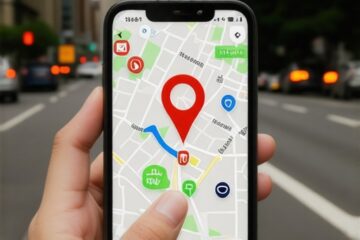
The “Map Pack” – those coveted top three spots in Google Maps – is governed by a triad of factors: Proximity, Relevance, and Prominence. While you may have high prominence (reputation) and relevance (keyword alignment), the arrival of a new player can disrupt the proximity balance. In this deep dive, we will explore why your local dominance is more fragile than you think and how you can leverage The Small Profile Move That Stopped Our Local Ranking Slide to regain your territory.
The Proximity Trap: How Google Redefines “Local” in 2026
In the current search landscape, proximity is often the heaviest weighted factor in the local algorithm. Google’s primary goal is to provide the most convenient solution to the user. When a competitor moves physically closer to the “centroid” of a search – which could be the center of a city or the user’s exact GPS coordinates – they gain an immediate, unearned advantage. This is what we call the Proximity Trap.
By 2026, Google has refined its ability to detect “hyper-local” intent. If a user is standing on a street corner searching for “plumber near me,” Google will prioritize a business located 500 feet away over a world-class service provider located two miles away. This often results in a “Hidden Radius Error,” where Google artificially shrinks the visibility circle of an established business the moment a denser cluster of competitors emerges. Essentially, the algorithm decides that the “local” area for that specific service has become smaller because there are now more options in a tighter radius. To combat this, you need a robust google business profile seo strategy that emphasizes prominence to override the proximity handicap.
We often see businesses drop from #1 to #21+ without a single policy violation or suspension. This isn’t a penalty; it’s a recalculation. When a new rival enters the “neighborhood cluster,” Google’s AI re-evaluates the “Relevance” of every player. If the new competitor has a cleaner address signal or is located in a high-traffic retail corridor that Google perceives as more “accessible,” you might find yourself a victim of The Hidden Radius Error That Pushes Your Map Listing Behind Smaller Rivals.
The “Openness” Update: Why Your Hours Are Now a Ranking Factor
One of the most significant shifts in the 2026 local algorithm is the “Openness” update. In the past, business hours were largely informational. Today, they are a dynamic ranking signal. Recent data from SEO communities and Reddit confirms that a “GMB listing will dynamically change according to the hours mentioned in listing.” If your business closes at 5:00 PM and your new competitor stays open until 8:00 PM, you will vanish from the Map Pack the moment the clock strikes 5:01 PM.
Google’s logic is simple: showing a closed business to a user who needs service *now* is a poor user experience. If a competitor opens nearby with extended hours, they aren’t just competing with you during the day; they are stealing your digital real estate during your off-hours. This creates a “ranking vacuum” where the new competitor builds authority and engagement signals while you are invisible. This is a primary reason Why Your Phone Stopped Ringing After the Last Maps Update.
To rank google business profile effectively in this environment, you must audit your operational hours. Are they accurate? Do they reflect when you are actually available to take a call? If you are a service-based business, ensure your “hours” reflect your availability for dispatch, not just your office staffing. Failing to manage this dynamic signal gives a new competitor an easy win in the real-time auction for local visibility.
Analyzing the New Rival: What Are They Doing Differently?
When a new competitor displaces you, your first step shouldn’t be panic – it should be an audit. A new business often launches with a “honeymoon” boost from Google, as the algorithm tests their relevance. However, if they stay at the top, they are likely executing a modern google business profile optimization playbook. You need to look at their review velocity, their post frequency, and their use of “near me” terminology.
- Review Velocity: Are they generating 10 reviews a week while you generate one? Google prioritizes recent engagement over historical volume.
- Keyword Integration: Are they naturally weaving neighborhood names and “near me” phrases into their GBP updates and Q&A section?
- Visual Data: Are they uploading high-resolution, geo-tagged photos daily? Google’s Vision AI uses these images to confirm the business is active and relevant to the location.
In some cases, you may notice a competitor “uploading 6 new listings” or using “sketchy” virtual offices to surround your location. While this is against Google’s TOS, it can cause a temporary ranking shuffle that pushes you out. Using professional local seo tools can help you track these changes in real-time and identify if a competitor is using spam tactics to manipulate the Map Pack. Don’t let them squat on your digital doorstep; learn to Stop Letting Big Chains Win with These 4 Moves to Claim Your Local Search Territory.
Hyper-Local Signals: Reclaiming Your Territory
To outrank a competitor who is physically closer to the searcher, you must prove to Google that you are more “Prominent” and “Relevant” to that specific zip code. This goes beyond standard SEO; it requires building hyper-local signals that anchor your business to the community. Proximity is a physical fact, but relevance is a digital perception that you can influence.
Start by creating content that mentions specific landmarks, neighborhood names, and local events. If you are a plumber in Austin, don’t just target “Austin plumber.” Target “Water heater repair near Zilker Park.” This tells Google that even if you are a mile further away, you are the local authority for that specific micro-neighborhood. This is a core component of local map pack seo in 2026. You can use a google maps rank tracker to see how your visibility changes block-by-block, allowing you to identify exactly where your “authority” ends and where your competitor’s begins.
Utilizing specialized local seo tools allows you to perform a google business profile audit tool check on your own listing compared to the intruder. Look for gaps in your “Local Justifications” – those small snippets of text Google pulls from your reviews or website to justify why you are a top result. If your competitor has a justification that says “Their website mentions [Service],” and you don’t, you’ve found your first point of attack. Understanding How Neighborhood Search Signals Kill 2026 Local Map Rankings is the first step to reclaiming your throne.
Technical Fixes for a Stalling Google Business Strategy
Sometimes, the reason a new competitor leaps over you is that your technical foundation is dated. Google’s crawlers are increasingly reliant on “Entity” data – how well your business is connected to other authoritative data points on the web. If your NAP (Name, Address, Phone) consistency is fractured or your website lacks local schema, your google business profile seo will suffer.
Key technical areas to address include:
- Local Business Schema: Ensure your website uses JSON-LD schema that explicitly links your website to your Google Business Profile CID.
- Map Embeds: Don’t just embed a static map. Use The Map Embed Technique That Actually Signals Authority to Local Search Crawlers to create a dynamic connection between your service pages and your physical location.
- Citation Cleanup: If you moved three years ago and old addresses still exist on obscure directories, Google’s confidence in your location drops. Perform The Citation Audit That Cleaned Up Our Messy Google Maps Data in One Week to solidify your proximity signal.
A google maps ranking service or a dedicated gmb ranking service can often automate these technical audits, but the principle remains: the clearer your data, the higher your “Confidence Score” in the local algorithm. When Google is 100% certain of where you are and what you do, it is more likely to show you over a closer but less “verified” competitor.
The Role of AI Summaries in 2026 Local Search
Search Generative Experience (SGE) and AI Overviews have fundamentally changed how users interact with the Map Pack. Google’s AI now synthesizes information from your reviews, your website, and third-party mentions to create a “summary” of why a business is the best choice. If your new competitor has reviews that specifically mention the “best customer service in [Neighborhood],” the AI might highlight them as the top choice regardless of proximity.
This is why google business profile optimization must now include “Sentiment SEO.” You aren’t just looking for five stars; you are looking for specific keywords within the reviews. If your competitor is winning because the AI thinks they are “faster” or “more affordable,” you need to pivot your review acquisition strategy to highlight those same traits. Check out 7 Review Tactics to Win 2026 AI Search Summaries to stay ahead of the curve. The AI isn’t just looking at who is closest; it’s looking at who is the best fit for the user’s specific problem.
Conclusion: Don’t Let Proximity Be Your Downfall
The arrival of a new competitor is a wake-up call, not a death sentence. While you cannot move your building closer to every searcher, you can significantly increase your “Prominence” and “Relevance” to the point where Google cannot afford to ignore you. By focusing on google business profile seo, optimizing for the “Openness” update, and leveraging hyper-local signals, you can maintain a dominant position in the Map Pack.
Remember, the local algorithm is designed to serve the user. If you provide the best engagement, the most detailed information, and the most consistent technical data, you will find it much easier to rank higher on google maps than a newcomer who relies solely on their physical address. Don’t wait for your rankings to slip further. Perform a comprehensive local audit today, reclaim your neighborhood authority, and show the algorithm – and your competitors – why you are the local leader.