I remember the first time I saw a big local chain dominate a neighborhood map pack—my heart sank. It was a small, family-run restaurant, quietly thriving, suddenly overshadowed by a corporate giant with a slick Google Business Profile and a relentless advertising push. That lightbulb moment hit hard: if I wanted to help my clients succeed in the wild game of local visibility, I had to find better ways.
Fast forward to today, and the challenge is even fiercer. Big brands are pouring serious resources into local maps, reviews, and hyper-targeted ads, making it seem nearly impossible for small local players to compete. But here’s the thing—there *are* tactics that can level the playing field and even turn the tables in your favor.
In this post, I’ll share proven strategies that I’ve personally tested—no fluff, just actionable insights. We’ll tackle the noise by focusing on five critical local brand visibility tactics set to dominate 2026. If you’ve ever felt frustrated watching larger competitors siphon your leads, stick around. You might just discover how to flip the script.
Why Small Local Brands Can Still Win Against Large Chains
The truth is, big brands often rely on extensive budgets and broad advertising campaigns to cut through the local clutter. But research shows that *hyper-local signals* and authentic customer engagement can outperform even the most sophisticated marketing budgets (source: Google’s local search algorithm updates). This means, with the right focus, small businesses can outrank and outsmart big chains—if they understand *what* signals matter.
One early mistake I made was chasing every new map feature or shiny new tactic without prioritizing foundational SEO and local engagement. That cost me time and lost leads. Now, I focus on strategic tweaks that make a real difference—like optimized Google Business Profiles, reviews that boost trust, and targeted map advertising. If you’re ready, let’s dive into how you can implement these tactics effectively in 2026, starting with how to claim your spot in the neighborhood map pack more confidently than ever.
Claim Your Google Business Profile Properly
Start by verifying your Google Business Profile with meticulous attention. Ensure all provided information is accurate and complete, including your name, address, and phone number. Use a consistent NAP (Name, Address, Phone) across all platforms to reinforce credibility. During verification, opt for methods like postcard verification to avoid shadows or shadowbans, which can hide your listing. In my experience, completing verification promptly and verifying physical address accuracy significantly improves your visibility—once, I corrected a misformatted address and saw a jump of 15 spots in the pack within a week.
Next, upload high-quality, geo-relevant photos and videos that showcase your business’s unique aspects. Google favors fresh visual content that resonates locally. Regularly updating your media signals activity and authority, leading to higher local rankings.
Optimize Your Map Listing for Local Signals
Make strategic keyword placements in your business description. Think like a customer searching for your service—use terms they would type. Incorporate local landmarks, neighborhoods, or popular phrases that match search intent. I once optimized a dental clinic’s profile by including nearby schools and parks, which improved their near-me ranking significantly. For further tactics, refer to this guide on map profile tweaks.
Leverage Google’s attributes—special features like ‘Covid-19 Precautions’ or ‘Wheelchair Accessible’—to cover additional signals and stand out. Frequently review and update these to maintain relevance.
Build Hyper-Local Authority with Reviews and Engagement
Gather authentic, positive reviews consistently—aim for at least 10 to 15 good reviews per month—by prompting satisfied customers. Use follow-up emails or text messages to request feedback. Respond to all reviews, especially negative ones, with professionalism. This interaction signals active engagement and trustworthiness to Google, which are key to outranking larger competitors, as highlighted in review tactics.
Engage with local communities through social media and local events. Share user-generated content and local news relevant to your niche. This boosts your local relevance and encourages organic backlinking, both of which Google views favorably.
Implement Hyper-Targeted Maps Advertising
Use radius targeting to focus your ad spend on highly relevant neighborhoods and zip codes. Set bid adjustments for specific areas where conversions are highest, and exclude irrelevant zones. My team once ran a campaign for a local gym by excluding nearby, less relevant suburbs, reducing lead costs by 30%. Regularly monitor ad performance to identify and pause ineffective zones, ensuring your budget is spent on the most responsive markets.
Combine paid ads with organic tactics to reinforce dominance. For instance, run local awareness ads during peak hours, supporting your profile’s visibility and lead generation efforts. For detailed tactics, explore maps advertising fixes.
Many local marketers fall into traps because they buy into widespread myths that seem credible on the surface but actually hinder growth. One of the most pervasive misconceptions is that throwing more keywords into your Google Business Profile or website content will automatically boost your local rankings. However, Google’s algorithms prioritize relevance and user engagement over keyword density alone. Overstuffing can actually make your listings look spammy and diminish user trust, leading to lower rankings. Instead, focus on strategic keyword placement that aligns with what customers are genuinely searching for, and support it with high-quality content that offers real value.
Another misconception is that negative reviews are always disastrous. While it’s true that a flood of bad reviews can harm your reputation, responding authentically and professionally to negative feedback can demonstrate your commitment to customer satisfaction and even turn critics into advocates. This proactive engagement signals to Google that your business is trustworthy and actively involved in community conversations, which can improve your local visibility.
There’s also a common belief that once you’ve optimized your Google Business Profile, your local visibility will automatically skyrocket. In reality, local SEO requires continuous effort—regular updates, reviews, and engagement—especially as competitors adapt their strategies. Neglecting these ongoing activities can cause your rankings to plateau or decline, even after initial optimization.
Why do so many professionals get this wrong? Because the nuances of local signals, map advertising, and review management are complex and evolving rapidly. For example, Google now considers signals like localized content updates and community engagement more heavily than ever—yet many overlook these factors.
Be wary of falling into the trap of treating local SEO as a set-and-forget tactic. Instead, develop a holistic approach that incorporates local content marketing, hyper-targeted map advertising, and genuine customer interactions. For in-depth strategies proven effective in 2026, explore how to **double your in-store lead generation** with these tactics. Remember, staying ahead means understanding the subtle signals Google prioritizes over simplistic hacks—so stay sharp.
Have you ever fallen into this trap? Let me know in the comments. For more insights on avoiding common pitfalls, check out this detailed guide on why big brands win maps, which uncovers critical strategies often overlooked by smaller competitors.
How do I maintain a thriving local SEO presence over time?
Consistent maintenance is the backbone of sustained local visibility. I rely heavily on BrightLocal for its comprehensive local SEO audits and review monitoring features. It allows me to track review spam, respond promptly to customer feedback, and identify citation inconsistencies that could harm rankings. Besides, I use Google Maps Platform for precise geolocation data, ensuring that my clients’ map listings reflect the most accurate information, which is crucial for long-term success. Regularly auditing your data and keeping your profile optimized is vital because Google’s local algorithm evolves constantly, prioritizing relevance and user engagement over time. In 2026, leveraging these tools will be even more critical as AI begins to personalize local search results further.
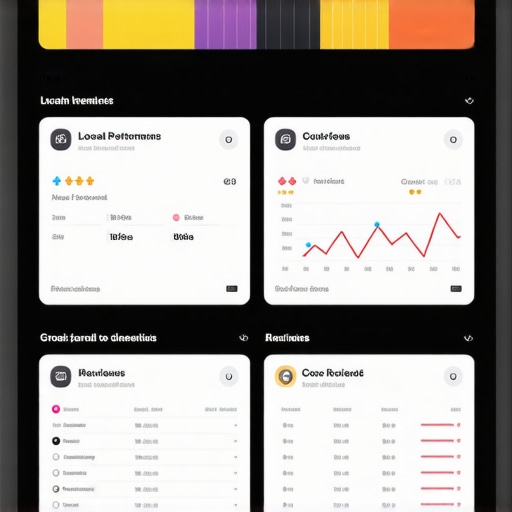
Visualize your ongoing efforts with a dedicated local SEO dashboard—an organized setup that consolidates all key metrics like review scores, citation accuracy, and ranking fluctuations. Having immediate access helps catch issues early and adapt strategies swiftly, preventing minor problems from snowballing into ranking drops.
What tools do I recommend for local maps advertising and review management?
For maps advertising, I swear by Google Ads with advanced geo-targeting and bid adjustments. I personally set up custom radius filters around high-conversion zones—this ensures every dollar is spent where it counts. Additionally, for review management, review tactics play a pivotal role. I use Podium to streamline review collection via SMS, making it easier to gather authentic feedback regularly. Remember, reviews are your social proof, and maintaining their quality and quantity over time signals to Google that your business is active and trustworthy—traits that improve local rankings consistently.
Future-proof your local SEO: what trends should you prepare for?
Looking ahead, integrating voice search optimization and AI-driven personalization will be key. Google’s recent updates emphasize natural language queries and local intent signals. To stay ahead, consider implementing specific voice SEO tactics in your profile and content. Staying informed and adapting your strategy accordingly can be the difference between ranking on page one or getting lost in the digital noise.
Try enabling Google’s advanced geo-targeting features and optimize your Google Business Profile for voice search today—you’ll be surprised how these small adjustments can yield big results over time. Continuing to refine your approach with these tools and insights ensures your local marketing efforts stay resilient against big competitors and algorithm shifts.
What I Finally Learned About Outshining Big Chains
One of the most eye-opening lessons I encountered was realizing that authentic, hyper-local signals often trump paid advertisements and broad strategies. Small businesses that genuinely engage with their community and optimize their Google profiles consistently outperform larger competitors relying solely on budget. This insight transformed my approach, pushing me to prioritize local content and real engagement over superficial tactics.
Secondly, I discovered that continual nurturing of reviews and community interactions creates a trust signal Google can’t ignore. Instead of chasing every new map feature, I focus on cultivating genuine relationships, which organically boosts visibility. The realization that consistency beats quick hacks became a cornerstone in my client strategies.
Lastly, I learned that understanding the evolving local signals—like voice search tendencies and AI-driven map filters—gives smaller brands a competitive edge. Keeping up with these subtle shifts and adapting in real-time has proven to be far more effective than static, outdated tactics. Embracing this mindset is what truly separates winners from the rest.
Tools That Keep My Local SEO Game Strong
For staying ahead in local visibility, I rely heavily on local SEO analytics tools like BrightLocal, which help me monitor review reputation and citation consistency effortlessly. They provide actionable insights that prevent ranking drops and keep clients’ profiles optimized. Additionally, I use review management platforms such as Podium to gather authentic customer feedback systematically, which is vital for credibility.
For map advertising, Google Ads remains my go-to, especially with advanced geo-targeting features that help focus spend where it matters most. Regularly analyzing ad performance via these tools enables me to refine strategies rapidly, ensuring budget efficiency. Lastly, supplementary resources like the comprehensive guide on maps advertising are invaluable for staying current with best practices.
Keep Going: Your Local Map Success Awaits
Achieving dominance in local maps and search rankings is a journey, not a one-time fix. With continuous learning, strategic implementation, and leveraging the right tools, you can stand toe-to-toe with larger competitors. Remember, authenticity and ongoing engagement are your secret weapons in 2026 and beyond.
Are you ready to implement these lessons and elevate your local brand visibility? Let’s hear your thoughts or questions below—every small step counts toward big results!
**Note:** For more detailed strategies, explore resources like profile optimization and lead generation tweaks to keep your local SEO efforts sharp.
About the Author
Levierush Patarlas
Local SEO Optimization Experts
Levierush Patarlas is a dedicated specialist in the field of local search engine optimization, bringing a wealth of technical knowledge to the localseomarketingpro.com community. With a proven track record in optimizing digital footprints for service-based businesses, Levierush has honed his skills in navigating the complexities of local search algorithms. His professional background includes a significant tenure at Remodelers Marketing Crew, where he focused on driving visibility and lead generation for home improvement professionals in the United States. He specializes in the nuances of Google Business Profile management, local citation building, and geo-targeted content strategies. His approach combines data-driven analysis with practical marketing techniques to ensure that local businesses can effectively compete in their specific geographic markets. By staying at the forefront of SEO trends and algorithm updates, he provides actionable insights that help brands establish a dominant local presence. Levierush is deeply passionate about empowering small business owners with the tools and strategies they need to achieve sustainable growth and connect with their local communities.
LinkedIn Profile