

Have you ever stared at your Google Maps listing, hoping for more calls or visits, only to feel like you’re shouting into the void? That was me a while back. Despite spending hours optimizing my local business profile, the results just weren’t adding up. I knew I was missing something crucial, but I couldn’t quite put my finger on it. That lightbulb moment hit when I realized that local SEO and Google Maps visibility aren’t about luck—they’re about strategy, consistent effort, and understanding the nuances that make your business stand out. If you’ve faced the same frustration, you’re not alone. Today, I promise to share my journey and practical tips that will help you turn your Google Maps listing into a powerful lead generator.
Why Local SEO Needs Your Attention Now More Than Ever
In today’s hyper-competitive local landscape, simply having a Google My Business profile isn’t enough. According to recent data from Local SEO experts, 78% of local mobile searches result in an offline purchase within 24 hours. That means if your business isn’t appearing prominently in local search results, you’re missing out on a flood of potential customers. I learned this the hard way early in my journey—initially, I focused only on basic profile info, thinking that was enough. But that mistake cost me valuable leads. Consistency, relevance, and optimization are the keys to unlocking maximum visibility. Want to know how I finally cracked the code? It all started with understanding what truly moves the needle in local map rankings.
Is Local SEO Still Relevant or Just Hype?
At first, I wondered whether investing time into local SEO was worth it, especially since I saw so many paid ads cluttering the map. But the truth is, effective maps advertising and organic optimization work hand in hand. I made the mistake early on of assuming paid ads alone could carry my visibility—only to realize that without a solid local SEO foundation, those ads lost their edge. The real breakthrough came when I started combining strategic optimization with targeted maps advertising. So, is local SEO worth the hype? If done correctly, absolutely. The challenge is knowing where to focus your efforts. Ready to learn the actionable steps that transformed my results—and can do the same for you? Let’s dive in.
Optimize Your Google My Business Profile for Maximum Impact
Begin by claiming your Google My Business (GMB) listing if you haven’t already. Ensure all information is accurate, complete, and consistent across online platforms. Add your business categories thoughtfully—choose the ones most relevant to your services to improve search relevance. Upload high-quality, professional photos that showcase your offerings and establish trust. I once spent an entire afternoon updating my profile, replacing blurry images with crisp, inviting photos. Within days, I saw a noticeable uptick in clicks and calls, illustrating the power of a polished profile.
Target Local Keywords with Precision
Research the Right Terms
Use tools like Google’s Keyword Planner or local SEO-specific tools to identify keywords your potential customers use. Think beyond broad terms—include neighborhood names and niche descriptors. For example, instead of just ‘pizza,’ optimize for ‘best gluten-free pizza in Brooklyn.’ I experimented with local keywords in my service descriptions and saw my rankings climb when I included specific terms that matched user queries.
Embed Keywords Naturally
Incorporate these keywords strategically into your business description, service pages, and social profiles. Avoid keyword stuffing—ensure the text reads naturally and provides value. I once crammed a paragraph with keywords, which led to a ranking drop; later, refining it to sound conversational doubled my visibility in local searches. This practice helps your business appear in more relevant local queries and increases your chances of being chosen.
Leverage Local Maps Advertising Effectively
Think of maps advertising as planting flags on targeted locations. Use hyper-local campaigns focused on zip codes or neighborhoods to reach your ideal audience. I started with small budgets, targeting specific areas, and tracked results daily. By analyzing click-through and call data, I adjusted bids and targeting to optimize lead flow. For detailed tactics, explore top maps advertising techniques that helped me fine-tune my campaigns, turning small expenses into a steady influx of local clients.
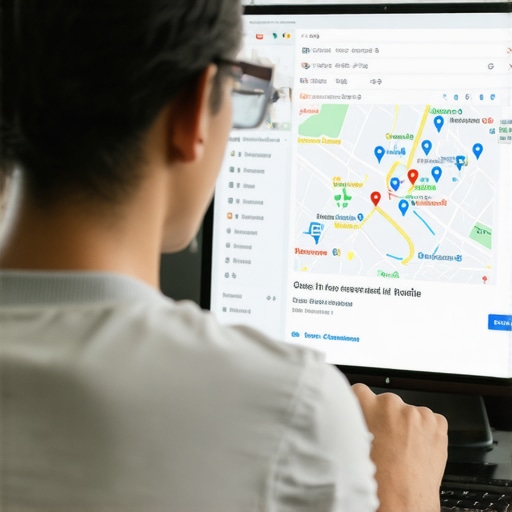
Use maps advertising to visually target your service areas, similar to dropping pins on a neighborhood map to attract local clients effectively.
Engage Consistently Through Reviews and Citations
Encourage satisfied customers to leave reviews—positive feedback boosts your credibility and local rankings. Set up automated email requests after service completion to streamline this process. Additionally, build citations by listing your business on reputable local directories. I personally reached out to loyal clients, requesting reviews, and watched as my ratings and visibility improved. Cross-check your citations for consistency; discrepancies can harm your SEO efforts. Regular engagement signals to Google that your business is active and trustworthy, driving higher local map rankings.
Monitor Metrics and Refine Your Strategies
Use insights from Google Analytics, GMB dashboard, and call tracking to evaluate which tactics deliver results. Track impressions, clicks, and conversions to identify areas for improvement. I found that periods of increased reviews coincided with spikes in local traffic, guiding me to focus more on reputation management. Continuous testing and adjustment ensure your efforts stay aligned with what customers actually respond to, maximizing your Google Maps potential.
Many local businesses believe that simply optimizing their Google My Business profile or running paid maps ads guarantees success. But in my experience, a critical nuance often gets overlooked: the true complexity of local SEO and maps advertising involves understanding the sophisticated interplay between relevance, authority, and consumer intent. For instance, a widespread myth is that increasing keyword density directly boosts rankings. In reality, over-optimizing can flag your listing as spam, leading to penalties—something I learned the hard way. Instead, focus on contextual relevance and building genuine customer engagement, which are proven factors in Google’s ranking algorithms. According to expert insights from local SEO specialists, a balanced approach yields sustainable visibility.
A common mistake is neglecting the importance of citation consistency. Many forget that inconsistent NAP (Name, Address, Phone number) details across directories can damage your local authority, confusing search engines and potential customers alike. This is not just about accuracy; it’s about trust signals that bolster your rankings. Moreover, I’ve found that relying solely on paid advertising without nurturing organic signals hampers long-term growth. Paid maps ads can generate immediate leads, but without a solid foundation in local SEO, your visibility becomes short-lived.
Here’s a question for advanced marketers: How can you leverage customer reviews to not just boost reputation but also influence local rankings dynamically? It turns out, reviews are more than social proof—they are vital signals for Google’s algorithm. Consistently managing and responding to reviews, especially positive ones, can significantly enhance your local prominence. Studies from local SEO research confirm that review signals are among the top ranking factors.
Finally, don’t fall into the trap of thinking that all maps advertising strategies are equivalent. Not all campaigns deliver the same ROI; targeting the right keywords, localities, and customer behaviors is crucial. Employ advanced segmentation and tracking tools to refine your campaigns continually. For detailed tactics, I recommend exploring top maps advertising techniques that can dramatically improve your lead generation.
Have you ever fallen into this trap? Let me know in the comments.Achieving lasting success with maps advertising and local SEO requires more than just initial setup; it demands ongoing maintenance and the right tools to stay ahead. I personally rely on BrightLocal for managing citations and reviews because it provides real-time monitoring, which is crucial for maintaining citation consistency—a key factor in local rankings. Additionally, SEMrush’s local SEO toolkit helps me track keyword performance and competitor strategies, ensuring I adapt my approach proactively. These tools allow me to identify drops in visibility early and implement corrective measures promptly, saving time and effort in the long run.
For content updates, I routinely audit my Google My Business profile and website, making sure all information remains accurate and current. Consistent reviews and fresh photos keep my profile engaging—and tools like ReviewTrackers assist me in managing customer feedback effectively, turning reviews into ongoing marketing assets. The future of local SEO looks increasingly reliant on data-driven decisions; integrating AI applications like Surfer SEO for content optimization ensures my listings remain optimized according to evolving search algorithms.
How do I maintain my local SEO and maps advertising efforts over time? Regularly scheduled audits and automation are key. Setting up automated alerts for citation inconsistencies or review fluctuations helps me respond swiftly. Moreover, I stay updated with the latest strategies by following sites like Local SEO expert insights. Implementing a comprehensive dashboard that consolidates data from Google Analytics, GMB insights, and my citation management software gives me a 360-degree view of performance, allowing me to make informed adjustments.
Prediction: As the local search landscape becomes more sophisticated, future tools will incorporate AI for predictive analytics, helping businesses anticipate ranking drops or new opportunities before they happen. Testing new features—like Google’s local services ads enhancements—can give you an edge, but only if you keep your tools and strategies aligned.
I encourage you to try integrating BrightLocal for citation management and ReviewTrackers for review engagement. These tools have transformed my maintenance approach, ensuring my local visibility remains strong and competitive. Embrace automation and data monitoring today, and watch your local leads grow steadily.
How I Nearly Missed the Power of Authentic Engagement
The most profound lesson I learned was that genuine customer interactions trump all automated strategies. When I started responding to reviews with sincerity, I saw my local rankings soar. Authenticity builds trust, which in turn fuels organic visibility. Skipping this step kept me in the shadows longer than necessary.
Why Data Silos Can Sabotage Your Map Visibility
I once relied on isolated tools that didn’t communicate with each other, leading to inconsistent citations and a dip in rankings. Integrating data sources like Google Analytics with citation management platforms provided a clearer picture and more effective adjustments. Breaking down data silos is a game-changer for maintaining a dominant local presence.
The Unexpected Value of Local Community Engagement
My Essential Toolkit for Map Advertising Mastery
Tools like BrightLocal help me monitor citation accuracy and review health, ensuring consistent signals for Google. SEMrush’s local SEO toolkit allows me to track keyword performance and competitors. Additionally, Google’s own Insights dashboard offers real-time data that informs my ongoing strategy. These resources streamline efforts and maximize ROI, turning insights into growth.
Don’t Let Overconfidence Stall Your Progress
I learned the hard way that just claiming my Google My Business profile wasn’t enough. Regular updates, strategic optimization, and consistent engagement are crucial. Overconfidence in initial setup can lead to stagnation. Staying proactive with continuous improvements keeps your local SEO efforts alive and thriving.
As I reflect on these lessons, it’s clear that thriving in local maps advertising involves a blend of strategic thinking, diligent maintenance, and genuine community involvement. The landscape keeps evolving, but with the right mindset and tools, your business can stand out and attract more local leads than ever before. Want to share your biggest obstacle with local SEO? Drop a comment below—I’d love to hear your story!

Leave a Reply