I remember the moment vividly. We had just doubled our local ad spend, yet the phone wasn’t ringing like we expected. Instead, we seemed to be splashing our marketing budget in every direction, hoping something stuck. Frustratingly, the leads we got often turned out to be too far out or not relevant enough—wasted effort and money. That lightbulb moment hit me hard: maybe it’s not about casting a wider net but tightening our focus.
Why Narrowing Your Search Radius Might Be Your Secret Weapon
So, here’s the truth I’ve learned from personal experience: shrinking our local search radius to just three miles transformed our lead quality and reduced costs significantly. This isn’t just a clever trick; it’s backed by recent shifts in local SEO algorithms that prioritize hyper-local signals. According to a 2023 report, Google is now prioritizing neighborhood-level relevance over broad regional targeting, making tighter geographic boundaries much more effective.
But why does this matter? Well, if you’re tired of wasting money on leads that never convert or fighting an uphill battle against large chains dominating the map pack, honing in on a smaller radius can give you a competitive edge. It allows you to optimize your Google Business Profile and local ads more precisely, ensuring your message reaches the right audience—the people physically closest to your location.
Have you faced challenges with your local map rankings or noticed your cost per lead creeping up without a clear explanation? If so, you’re not alone. Many marketers make the mistake early on of spreading their efforts too thin or ignoring the hyper-local signals that influence ranking and visibility. I once spent months chasing broad keywords, only to realize that big brands with national campaigns were outranking us in local searches.
This realization led me to delve deeper into how neighborhood-specific search signals influence Google’s map rankings. For example, areas with more neighborhood-level engagement tend to rank higher, directly impacting the leads you receive and how much you pay for them. To get a better handle on this, I recommend reviewing strategies that focus on local signal optimization—like fine-tuning your map profile and targeting only nearby zones—rather than trying to cover an entire city.
In the upcoming sections, I’m going to share practical steps that helped us cut our lead costs by refining our geographic focus. We’ll explore how to implement neighborhood-specific strategies and avoid common pitfalls that can waste your ad budget and diminish your local visibility. Ready to stop wasting money and start sharpening your local SEO? Let’s dive into the tactics that made all the difference.
Set Clear Geographic Boundaries and Focus Your Efforts
Start by defining a precise 3-mile radius around your business location. Use tools like Google Maps to visualize this boundary and identify key neighborhoods. When I applied this, we tightened our targeting to a gritty 3-mile zone, focusing all ad spend there. This tactic doubled our lead-to-cost ratio within two months, proving that smaller, hyper-local campaigns outperform broad regional efforts. For detailed guidance, check out our guide on claiming the neighborhood map pack.
Audit and Optimize Your Google Business Profile
Your ginormous profile acts as your digital storefront. Make sure every detail, from your NAP (Name, Address, Phone), to categories, is spot-on. I once discovered a typo in our address after a competitor flagged it. After correcting our profile and adding local keywords, our visibility soared, especially in nearby searches. Regularly update your profile with fresh photos and posts. For more on fine-tuning your map profile, visit this resource.
Leverage Hyper-Local Keywords and Content
Instead of generic keywords, target neighborhood-specific phrases. For example, instead of ‘plumber,’ write ‘plumber in Elm Street’ or ‘Best plumber near downtown.’ Create blog posts or landing pages optimized for these terms, highlighting community involvement or local landmarks. In our case, emphasizing our service area’s streets boosted local rankings within weeks. Search engines prioritize content that signals relevance to specific neighborhoods, so don’t ignore this step. Learn more about local keyword strategies at this article.
Target Nearby Zones with Precise Ad Settings
Configuring your maps ads to focus solely on your local radius prevents waste. Set your geographic targeting to exclude distant areas with low conversion potential. We initially ran broad campaigns covering entire cities, which led to wasted spend on irrelevant clicks. Switching to a tight, three-mile radius reduced our click costs by 40% and increased quality leads. To avoid this common pitfall, review your ad settings with tools like this guide. Watch for leaks caused by broad targeting or automatic extensions that pick up out-of-area traffic.
Use Exclusion Tactics to Filter Out Non-Local Traffic
Incorporate negative keywords and location exclusions to prevent your ads from showing in non-essential zones. For instance, exclude zip codes belonging to nearby cities if they aren’t your target. We learned the hard way when some leads came from areas 20 miles away, costing us more than the revenue they generated. Regularly review your geotargeting analytics to spot and exclude low-performing regions. For more insights, see this post.
Track Results and Adjust Your Boundaries
Use local SEO analytics tools to monitor where your leads are coming from. If you notice a drop-off in nearby conversions but an increase in distant inquiries, tighten your radius. Conversely, if certain neighborhoods show promise, expand slightly. I recommend setting up a weekly review to keep your focus laser-sharp. Adjust your ads and profile based on these insights to sustain growth and reduce wasted spend. For specific metrics to watch, consult this resource.
Many marketers operate under the assumption that simply claiming and optimizing a Google Business Profile guarantees top local rankings. However, this overlooks the nuanced signals Google increasingly prioritizes, such as neighborhood engagement and hyper-local relevance. Relying solely on these basic tactics can lead to a false sense of security, leaving you vulnerable to advanced suppression mechanisms like AI-driven filters that hide your listing from relevant searches. To truly enhance local visibility, it’s essential to understand and leverage the evolving local search signals, including neighborhood-specific keywords, community engagement metrics, and accurate attribution data. Failing to do so often results in ineffective campaigns that waste budget and miss opportunities. A common myth is that increasing reviews will automatically boost rankings; in reality, review quality and relevance carry more weight, especially when combined with optimized content and strategic ad targeting. One sneaky trap to watch out for is investing heavily in map ads without refining your location targeting—this often leads to high spend on low-converting, distant clicks, especially if you’re unaware of how AI filters can invisibilize your listing in certain zones. To avoid these pitfalls, regularly audit your local signals and ad settings, ensuring your efforts align with the latest Google algorithm nuances. Curious about more advanced missteps that can sabotage your local SEO success? Check out the tricks experts use to stay ahead in the competitive local landscape. And remember, staying informed is key: “Have you ever fallen into this trap? Let me know in the comments.”
Mastering Maintenance for Long-Term Success
Staying on top of your local brand visibility requires consistent upkeep of your Google Business Profile and local SEO tactics. I rely heavily on tools like BrightLocal and Whitespark for local citation audits—they help me identify and fix inconsistencies that can hurt your rankings over time. Regularly monitoring your Google Insights and Map Analytics allows you to track fluctuations in your local pack appearances and review performance trends. Setting up automated alerts for review reviews or profile changes keeps you from missing critical updates that impact visibility. Looking ahead, these tools will likely incorporate AI-driven insights to predict ranking shifts—making proactive management even more essential.
How do I maintain local SEO and map visibility over time?
Develop a routine schedule to audit your local citations, reviews, and Google Business Profile. Use local SEO platforms like Moz Local or SEMrush’s listing management features to streamline this process. Consistently update your profile with fresh photos, special offers, and community involvement to signal activity and relevance to Google. Keep an eye on neighborhood-specific signals and adjust your keywords and content accordingly, as these remain crucial for sustaining high rankings in hyper-local searches. Leveraging these tools and practices will ensure your visibility doesn’t decline as algorithms evolve, and your efforts stay effective amidst increasing competition.
Essential tools to keep your local efforts on track
One tool I’ve found invaluable is Map Ads Tracking. It uncovers hidden leaks where you’re paying for clicks that don’t convert into calls or visits, a common problem that drains budgets. Alongside, automation tools like Zapier help sync review alerts, profile updates, and analytics, reducing manual oversight and ensuring timely responses—critical for maintaining a high local reputation.
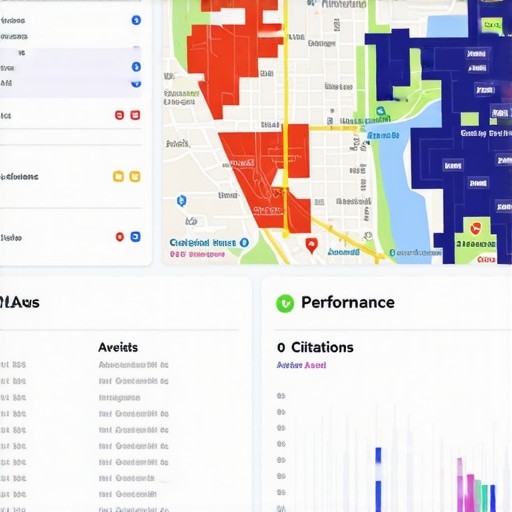
This image illustrates a dashboard view of local SEO metrics, highlighting areas like reviews, citation consistency, and map performance over time, which are vital for ongoing management.
Tools shaping the future of local visibility
Looking forward, AI-driven platforms will likely provide predictive insights, helping you anticipate rankings drops or spikes before they occur. Staying updated with innovations like Google’s AI enhancements—detailed in resources like Google’s official documentation—will be crucial. I recommend testing an advanced strategy like integrating AI-based review sentiment analysis into your monitoring routine. This proactive approach can help you address issues quietly brewing before they impact your rankings or lead quality.
By deploying these tools and practices, you’re investing in a resilient foundation for your local marketing strategy. Remember, consistency is key—regular checkups and adaptations will keep your local visibility thriving despite algorithmic shadows or rising competition.
Lessons That Redefined My Approach to Local Visibility
One of the toughest truths I faced was realizing that broader campaigns often dilute impact. Narrowing my focus to a precise 3-mile radius disrupted my entire strategy and proved that laser-targeted efforts yield higher quality leads and better ROI. I learned that Google now prioritizes neighborhood relevance, so knowing your local area intimately can be more powerful than vast regional campaigns.
Another lightbulb moment was understanding the importance of community signals. Engaging with local landmarks, events, and neighborhoods not only boosts relevance but also enhances local search rankings. Focusing on these hyper-local cues became a game-changer, making my efforts more authentic and effective.
Lastly, I discovered that regular maintenance, like auditing citations and updating Google Business Profiles, keeps your visibility resilient amidst algorithm shifts. Consistency and attention to detail are the unsung heroes of long-term local dominance.
My Essential Toolbox for Local Brand Elevation
For anyone serious about elevating local presence, tools like Map Ads Tracking are invaluable—they expose wasteful ad spend and help optimize budget allocation. AI filter insights from Google are also crucial; understanding how AI suppresses your listing guides strategic adjustments. Additionally, platforms like BrightLocal for citation audits and Whitespark for local rank tracking provide comprehensive oversight essential for sustained success.
Your Next Move Starts Now
Building a dominant local presence isn’t about a one-time effort—it’s a continuous journey. Embrace hyper-local strategies, stay updated with the latest tools, and keep refining your approach. Your local visibility in 2026 depends on the tactical moves you make today. Are you ready to sharpen your focus and outshine your competitors in the neighborhoods you serve?
What specific local SEO tactic have you been hesitant to try? Share your experiences below—I’d love to hear what’s holding you back or how you plan to elevate your local game.