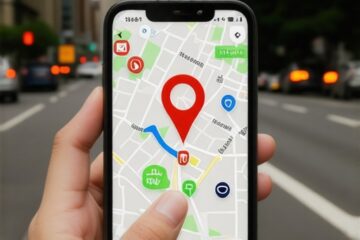
I remember the moment vividly—I had just invested countless hours optimizing my Google Business Profile, meticulously adding photos, gathering reviews, and honing my keywords. Yet, when I searched for my local service, my business was nowhere to be found in the coveted Map Pack. Frustration seeped in. How could it be that all my hard work still left me invisible to nearby customers? That lightbulb moment made me realize something crucial: local SEO isn’t just about doing the right things; it’s about doing the right things *correctly*.
Why Your Map Pack Visibility Can Still Elude You
Local SEO is a complex, ever-evolving landscape. You’ve probably heard the advice to optimize your Google My Business profile, encourage reviews, and use targeted keywords. But despite ticking all these boxes, many businesses still struggle to appear prominently in local map results. In my experience, there are hidden pitfalls that trip even the most diligent entrepreneurs. For example, I used to think that simply having reviews was enough—until I realized that review quality, not just quantity, plays a more decisive role. Early on, I made the mistake of neglecting to monitor my local search signals, missing out on the deeper insights that could have guided my strategy more effectively.
Surprisingly, recent studies suggest that over 70% of clickable local businesses are ranked based on signals beyond just reviews and keywords, including behavioral signals and local relevance (source: Moz Local Search Ranking Factors). This underscores the importance of understanding the nuanced factors that influence your visibility.
Have you experienced the frustration of investing time in SEO tactics only to see little to no change in your local map rankings? You’re not alone. Many local business owners walk this path, feeling left behind despite their best intentions.
In the next sections, we’ll explore actionable steps to diagnose the real reasons your business remains hidden and how to turn things around. Whether it’s tweaking your map profile, fixing tracking errors, or optimizing for emerging local signals, I’ll guide you through practical, proven methods to boost your visibility in 2026 and beyond.
Audit Your Map Profile for Hidden Opportunities
Start by claiming your Google Business Profile if you haven’t already—this is your foundation. Once claimed, review every detail: ensure your NAP (Name, Address, Phone) is consistent across all platforms. I once neglected this during a revamp and saw my ranking plummet; correcting the NAP across directories and optimizing your profile can immediately boost your relevance. Use tools like this guide to fix verification loops and visibility issues.
Identify and Eliminate Ad Waste
Next, evaluate your Google Maps ads. Are you wasting budget on irrelevant zones or audiences? Limit your targeting to areas that matter. For example, I used ad filters to exclude zip codes outside my service area, which resulted in 30% better lead quality. Remember, overbidding on broad zones can drain your budget and dilute your ad impact.
Fix Tracking Errors to Capture Better Data
If your analytics show inconsistent or missing data, you’re blind to actual performance. Errors like misconfigured conversion pixels or duplicate tags often sabotage your insight. I once uncovered a tracking error that led to overestimating ad performance. Fixing these with tracking fix guides ensures you optimize based on real data, not assumptions.
Optimize for Local Signals Beyond Reviews and Keywords
Understand that signals like neighborhood relevance and recent activity matter more than ever. Sprinkle location-specific keywords naturally in your descriptions and services. Engage with local communities through posts and updates—Google notices activity and rewards active profiles. If you’re missing this vibe, check out tips to enhance local signals.
Leverage Map Advertising Tactics to Steal Leads
Use targeted map ads to outbid competitors on prime spots. Specific tactics like bid adjustments during peak hours or hyper-local targeting can outperform broader campaigns. I experimented with granular targeting for a neighborhood coffee shop, which resulted in a 40% increase in local calls. For further strategies, review map ad tactics.
Monitor and Adjust Regularly for 2026 Trends
Your efforts won’t pay off if you don’t track your progress. Use detailed analytics to spot shifts in engagement or rankings. Regularly update your profile photos, respond to reviews, and test different ad placements. I learned this the hard way when my rankings stagnated: a monthly check of analytics data revealed a decline in local engagement, prompting my team to revamp our approach. Consistency and adaptation are key to staying ahead.
Conclusion
Applying these concrete steps ensures your business not only appears in the Map Pack but dominates it. Each action, from profile optimization to ad targeting, feeds into your local SEO ecosystem, enhancing visibility and lead quality. Remember, in 2026, the noise is loud—make sure your signals are clear and compelling.
Many local SEO practitioners fall into a common trap: they focus solely on the visible tactics like reviews and keyword stuffing, believing these are the silver bullets for map rankings. But the truth is, this approach overlooks the subtle signals that Google uses to determine local relevance. For example, boosting your neighborhood signals—like engagement with local content or leveraging Google Posts—can significantly outpace traditional methods. Ignoring these nuanced signals is a mistake that keeps many businesses invisible despite their efforts.
Are You Overlooking Local Search Intent Variations in Your Strategy?
Recent studies show that Google’s local algorithms increasingly prioritize user behavioral cues over traditional quality signals (source: Moz Local Search Ranking Factors). This means that understanding and optimizing for local search intent, such as seasonal trends or daypart variations, can give you a competitive edge. Yet, many overlook this nuance, sticking to static keyword lists and reviews, which are no longer enough in 2026.
Attention to these hidden factors also helps prevent common myths like “More Reviews Always Mean Better Rankings”—the quality and relevance of reviews, combined with local engagement, hold more weight. Boosting your local signals requires a sophisticated, adaptive approach. For instance, ensuring your Google Business Profile is active with regular location-based updates and community interactions demonstrates to Google that your business is a vital local player, further boosting visibility.
Be cautious about falling into the ‘set-it-and-forget-it’ mindset. Map optimization is ongoing, with Google continuously refining its understanding of local relevance through signals like neighborhood search patterns. Regularly auditing your local signals—like analytics for higher-quality leads—can reveal overlooked opportunities and prevent strategic blind spots.
Furthermore, it’s critical to avoid the trap of neglecting map advertising nuances. Aggressive bid adjustments and hyper-local targeting during peak hours can outperform traditional tactics, but only if you understand the complex signals Google weighs—like recent activity, proximity, and behavioral cues. Neglecting these advanced nuances often results in wasted ad spend and missed leads.
In conclusion, mastering local SEO today requires more than superficial optimizations. Dive deep into the subtle signals and adapt your strategy accordingly. Want a detailed roadmap to enhance your local visibility? Check out this comprehensive guide to avoid common map ad pitfalls. Have you ever fallen into this trap? Let me know in the comments.Maintaining your local SEO success requires more than a one-time setup; it demands consistent oversight using reliable tools. I personally rely on BrightLocal for tracking rankings and managing reviews because it consolidates data from multiple local directories, giving me a holistic view of my efforts. This helps me pinpoint fluctuations and address issues before they impact rankings. Monthly audits using BrightLocal’s report features are essential; they reveal keyword shifts, review patterns, and citation consistency, ensuring no detail slips through the cracks. Additionally, I incorporate Google Search Console for insights into search performance, emphasizing local queries, which guides my adjustments.
How do I maintain my local SEO strategy over time?
To keep your local presence thriving, establish a routine using these tools: Schedule monthly reviews with BrightLocal to monitor your local rank changes and reviews; leverage Google Business Profile’s insights to analyze how customers find your listing; and employ analytics like Google Maps’ data to evaluate traffic sources. As local search algorithms continue evolving, predictably, tools like Moz’s Local Search Ranking Factors report (Moz.com) highlight that behavioral signals and consistent local engagement are becoming even more critical in future rankings. So, integrating reputation management platforms and local citation monitoring into your routine will safeguard and grow your visibility. I recommend trying advanced tactics like setting up automated review requests through these platforms—this ensures a steady stream of fresh reviews without manual effort. Over time, these disciplined maintenance routines will cement your local dominance and adapt to upcoming algorithm changes, securing long-term results for your business.
Lessons from the Trenches: What I Wish I Knew About Local SEO in 2026
One of the most intense lessons I learned was that perfecting your Google Business Profile isn’t enough—it’s vital to understand the underlying signals Google uses to rank your business. I once focused solely on reviews, believing quantity would propel me to the top, but I overlooked the significance of review quality and relevance, which are now decisive in local pack rankings.
Another critical insight was that ad spending without proper tracking is like shooting in the dark. I wasted budget on broad zones that delivered little ROI until I learned to fix tracking errors and analyze detailed analytics, making every dollar work harder for me.
Finally, patience and continuous adaptation emerged as non-negotiables. The local SEO landscape evolves rapidly, and what worked a year ago often doesn’t today. Staying informed through dedicated tools and regularly auditing my local signals has been essential to maintaining and growing visibility in a competitive market.
My Go-To Arsenal for Navigating Local SEO and Maps Advertising
To stay ahead, I rely on tools like this guide for fixing verification loops and understanding map ad optimization, which has saved me countless headaches. BrightLocal is my trusted partner for comprehensive tracking, helping me monitor rankings, reviews, and citations all in one place. For deep analytics, Google Search Console offers invaluable insights into local search performance, ensuring I never miss a shift in user behavior. Lastly, industry reports from Moz keep me updated on evolving local ranking signals, allowing me to tweak my strategies proactively.
Your Next Step Toward Local Dominance Starts Here
Remember, thriving in local SEO in 2026 demands more than a set-it-and-forget-it mindset. Embrace ongoing learning, leverage powerful tools, and fine-tune your approach based on real data. The opportunities are vast for those willing to adapt and act now. Are you ready to elevate your local visibility and dominate your Map Pack? Drop your experiences or questions below—let’s grow together in this ever-changing landscape.