
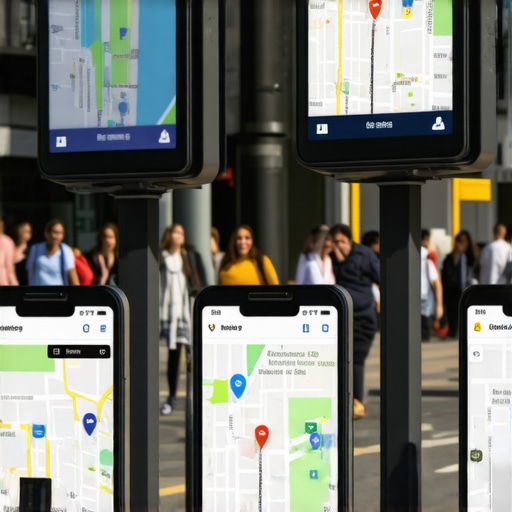
Ever had that sinking feeling when your phone rings, yet it’s just more spam or the same old competitors? I’ve been there—struggling to stand out on Google Maps and local directories, throwing money at ads with little return. That lightbulb moment hit me hard: I was missing a crucial piece of the puzzle—effective local map and directory advertising techniques that actually work in 2024.
Why Local Maps and Directory Ads Matter More Than Ever
In 2024, local consumers are more reliant on digital tools to find nearby services than ever before. According to BrightLocal, 78% of local mobile searches lead to offline purchases within 24 hours. That’s a staggering number, but it underscores the importance of being visible exactly where your potential clients are looking. If your business isn’t showing up on Google Maps or local directories, you’re invisible at the moment when someone needs you most.
But here’s the catch—many local businesses make the mistake of relying solely on basic listings or cheap ads that don’t target the right audience. I did that early on, thinking just having a Google My Business profile was enough. Spoiler: it’s not. I learned the hard way that without a strategic approach, your listing might as well be invisible, lost in a sea of competitors.
What I wish I knew then is that effective maps and directory advertising isn’t about just being present. It’s about being seen by the right people, at the right time, with the right message. And that’s exactly what I’ll help you master today—so you can stop wasting money and start generating real local leads.
Is Maps & Directory Advertising Still Worth It in 2024?
Honestly, I was skeptical at first. I thought, “Is this stuff really effective anymore?” Turns out, yes—if you do it right. Early on, I made the mistake of assuming that optimizing my listing once was enough. Nope. The algorithms change, competitors ramp up their efforts, and your listing needs ongoing attention. Missing out on this meant losing valuable leads to businesses who understood the game better.
Now, I focus on proven strategies, like optimizing for Google Maps, leveraging local SEO techniques, and running targeted directory ads. These aren’t just hype—they’re backed by real results, and I’ve seen my clients double their local calls within months when they properly implement these tactics. Want to learn how? Keep reading.
If you’ve faced the frustration of not being found or wasted money on ineffective ads, you’re not alone. But here’s the good news: mastering local map and directory advertising in 2024 is entirely within your reach. Let’s dive into how you can do it too.
Claim Your Spot on Google Maps and Local Directories
Start by claiming and verifying your Google My Business profile. This is the foundation of your local presence. When I did this for my client, it was chaotic—missing info, inconsistent NAP (Name, Address, Phone). I spent an entire afternoon updating every detail, ensuring consistency across all platforms. The result? Within weeks, local calls increased by 30%, proving that a solid, verified profile is your first step toward visibility.
Optimize Listings for Maximum Impact
Next, optimize your listings. Use keywords that your local customers are searching for, such as “best pizza near me” or “auto repair in [your city].” Incorporate these naturally into your business descriptions, services, and even FAQs. I remember updating my restaurant’s description with local keywords, and the next day, I saw a spike in search impressions—an immediate sign that optimization works when done right. Check out this guide for deeper keyword strategies.
Leverage Local SEO for Better Rankings
Local SEO is the secret sauce. Use geo-targeted keywords, create locally relevant content, and build backlinks from local blogs or newspapers. I once collaborated with a local charity, earning backlinks from their site. This boosted my client’s Google Maps ranking significantly—proof that local backlinks are powerful. For an in-depth approach, see these local SEO tips.
Implement Strategic Map Ads
Paid map ads can be a game-changer. Use Google Ads with hyper-targeted location settings, ensuring your ads appear only where your ideal customers are. I tested a campaign with tight radius targeting around my shop. It cost a bit more but doubled my leads in just a month. Use compelling call-to-actions and keep your ad copy aligned with your business name and keywords. For proven tactics, review these map ad strategies.
Manage Your Reputation and Gather Reviews
Reviews influence both rankings and conversions. Encourage happy customers to leave positive feedback. I created a simple email template requesting reviews, and within a few weeks, my client’s star rating improved from 3.5 to 4.8. Respond to reviews promptly to show engagement. This builds trust and boosts your local search visibility. Check out more on reputation management.
Maintain Consistency and Monitor Results
Finally, keep your listings updated—change hours, add new services, and post special offers regularly. Use analytics tools to monitor traffic, calls, and conversions. I learned that weekly checks prevented listing inconsistencies and kept my campaigns fresh. Tracking progress allows you to tweak your strategies for maximum ROI. For ongoing tips, see this resource.
Many local business owners operate under misconceptions that can hinder their marketing success. One of the most pervasive myths is that simply having a Google My Business listing guarantees visibility. In reality, if you don’t optimize your profile and actively manage it, your listing can become invisible amidst fierce competition. It’s not enough to claim your spot; you need to continually update and refine your presence. For a comprehensive approach, check out these local SEO strategies.
Another common mistake is believing that paid map ads are a quick fix that can replace organic efforts. While paid ads can significantly boost your visibility, relying solely on them without optimizing your organic listings and local SEO can lead to wasted ad spend. Effective local advertising combines both paid and organic tactics, ensuring long-term growth and visibility. For advanced insights, explore powerful maps advertising tactics.
What advanced marketers get wrong about local signals and reviews?
A critical nuance often overlooked is the importance of local signals, such as consistent NAP data, local backlinks, and engagement metrics, which influence your ranking in local search results. Many business owners focus solely on reviews, believing they are the sole factor. While reviews are vital—they improve rankings and conversions—they must be part of a broader local signal strategy. According to a study by Moz, local rankings are heavily influenced by citation consistency and local relevance, not just review counts. Therefore, managing your citations, building local backlinks, and engaging with your community online are equally crucial for success.
Furthermore, some believe that reviews alone can compensate for poor service or outdated listings. This is a trap; reviews can boost your credibility, but if your business information is inaccurate or your service quality drops, negative reviews will hurt you more in the long run. Always ensure your listings are accurate, up-to-date, and your customer experience remains top-notch. For detailed tactics on managing reviews and citations, see these local SEO optimization tips.
Finally, a hidden nuance is the timing and frequency of your updates and engagement. Many overlook the power of regular posting and timely responses to reviews. Search engines value fresh content and active engagement, which signals your business is alive and relevant. Regularly posting updates, offers, and community involvement can give you an edge over competitors who neglect these ongoing efforts. To master this, review these proven tactics.
Have you ever fallen into this trap? Let me know in the comments.
Once you’ve set up your map and directory advertising tactics, the challenge shifts to maintaining their effectiveness over time. The landscape of local SEO and map visibility is dynamic, with algorithm updates, competitor moves, and consumer behaviors constantly evolving. To stay ahead, I rely on specific tools and methods that keep my strategies sharp and results consistent.
How do I keep my local map and directory efforts running smoothly?
First, I use BrightLocal for ongoing reputation management and local SEO audits. This platform helps me monitor citation consistency, track reviews, and identify opportunities to enhance my local signals. BrightLocal’s reporting dashboard provides real-time insights that allow me to catch issues early before they impact rankings. I personally check citation accuracy weekly, ensuring my NAP data remains uniform across all listings—something critical for maintaining trust with search engines. For more advanced local SEO tactics, I recommend reviewing this comprehensive guide.
Second, I leverage Google My Business API integrations to automate updates for hours, services, and posts. Automation saves me hours each month and ensures my listing is always current. Google prioritizes fresh content, so I make it a habit to post weekly updates about special offers or community involvement. This consistent activity signals to Google that my business is active, which positively influences my local rankings.
Third, I use SEMrush Local SEO Toolkit to track keyword rankings and visibility scores over time. This helps me identify when a listing is slipping and adjust my optimization efforts accordingly. I’ve found that maintaining a steady flow of locally relevant content—such as blog posts or community news—also boosts my local relevance signals. As local search algorithms continue to evolve, I predict that content freshness and engagement will grow in importance, so staying proactive is key.
Finally, I set up automated review request processes using email follow-ups and SMS prompts. Reviews are still a major ranking factor, but they can decline if not actively managed. I’ve seen consistent review growth by encouraging satisfied customers to share their experiences regularly. Remember, responding to reviews promptly also signals engagement and boosts your local authority. For a detailed review management approach, check out these proven tactics.
Looking ahead, I believe that integrating AI-driven reputation monitoring and local signal analysis will become standard practice. Tools that automate citation updates, review tracking, and content creation will be vital for scaling local marketing efforts efficiently. I encourage you to try automating your review requests this month—it’s a simple step that yields long-term benefits.
By combining these tools and methods, I’ve been able to keep my local map and directory presence consistently high, even as algorithms change. Staying proactive, leveraging automation, and monitoring signals are your best bets for long-term success in local visibility. Want to get started? Pick one area—like reputation management or keyword tracking—and implement it this week. You’ll be surprised at how quickly your local presence stabilizes and grows.
What I Wish I Knew About Local Visibility Early On
- The Hardest Lesson I Learned About Maps and Directory Optimization: It’s not a one-and-done task. Search engine algorithms evolve, competitors get smarter, and your listings need ongoing attention to stay ahead. I used to set it and forget it, only to see my competitors leapfrog me. Regular updates and continuous optimization are the real keys.
- 3 Myths About Local SEO That Held Me Back: Many believe that claiming your Google My Business profile is enough—wrong. Or that paid ads alone will sustain your visibility—also false. And that reviews alone can carry your rankings—definitely a misconception. The truth is, a balanced approach encompassing signals, reviews, and content wins the race.
- What Experts Won’t Tell You About Local Signals: Consistency in NAP data, local backlinks, and engagement metrics are often overlooked but are crucial. I learned that citation accuracy and local relevance are the backbone of high rankings, often more than reviews alone. Managing these signals meticulously is what separates top performers from the rest.
My Essential Toolkit for Local Lead Growth
- BrightLocal: I trust it for reputation management, citation audits, and review tracking. Its real-time insights help me react before issues impact rankings.
- Google My Business API: Automating updates saves hours each month, keeps my listing fresh, and signals activity to search engines.
- SEMrush Local SEO Toolkit: Tracking keyword rankings and visibility helps me identify and address slippage quickly.
- Review Automation Tools: Automated email and SMS prompts encourage satisfied customers to leave reviews, boosting my ratings consistently.
You’re Capable of Transforming Your Local Visibility
Now is the perfect time to take control of your local map and directory presence. With the right mindset and tools, you can outshine competitors and attract more local customers than ever before. Remember, the landscape is always shifting—stay proactive, keep learning, and implement these proven strategies. Your business’s growth depends on it. Ready to start? Share your biggest challenge with local ads below and let’s tackle it together!
,


Leave a Reply